
Choosing Thankfulness in Hardship: Angelique Nibaruta on Psalm 9 and Trusting God
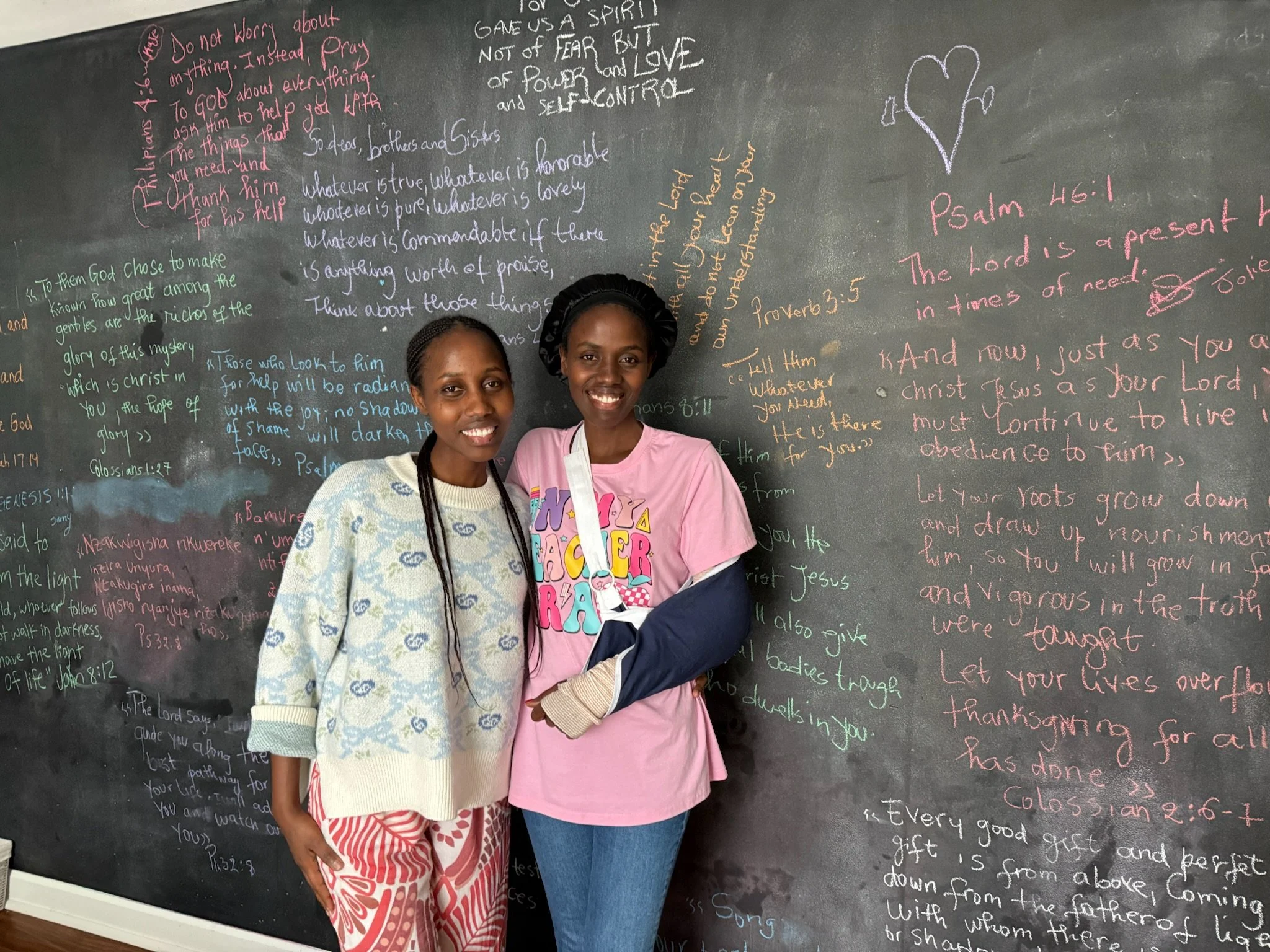
After surviving a tragic car accident that claimed the lives of two fellow passengers, student Angelique Nibaruta reflects on Psalm 9, grief, and the difficult but transformative choice to thank God even in suffering. As a community, we remain deeply grateful for Angelique’s life and continued recovery.
Choosing Thankfulness in Hardship
Psalm 9:1-2:
“I will give thanks to the LORD with my whole heart;
I will recount all of your wonderful deeds.
I will be glad and exult in you;
I will sing praise to your name, O Most High.”
The keywords that I found here are “my whole.”
I tried to look at the Hebrew word for this, which is Kol, meaning whole or complete. There is no divided heart here, no second focus. Everything is directed toward thanksgiving to God.
The psalmist makes this declaration with three verbs: I will recount, I will be glad, and I will sing praise.
In interpreting this, I think the psalmist is raising the point that no matter what may come, he will still choose to recount what the Lord has done. He will still be glad, and he will still sing praise to God’s name.
Choosing God’s Perspective
This is a decision that comes from having a divine perspective, allowing God to be God over every current moment. Even when we do not understand what is happening or what will come next, we continue trusting in Him.
Normally, as human beings, we struggle with thanksgiving, especially when we are going through hardship. Our minds freeze. It becomes difficult to think of even one thing the Lord has done. But here, the psalmist gives us a practical way to choose and refocus ourselves.
I love that we have the privilege of choosing thankfulness. Choice does not always look emotional or expressive. Often, we do not feel like giving thanks. Sometimes we do not even have the words to articulate it. But we still choose.
Trusting God’s Faithfulness
Verse 10 says that “those who know your name trust in you because you have not abandoned those who seek you.” In this verse, the psalmist emphasizes that those who have experienced God and truly come to know Him are convinced to trust Him. The phrase “have not abandoned” also shows that God has remained faithful to those who seek Him.
In examining this passage, we see that the psalmist has already chosen where he stands, regardless of what may surround him. Those who trust in God know that He has not forsaken them. They are convinced by what He has already done, and they trust that He will continue to be faithful.
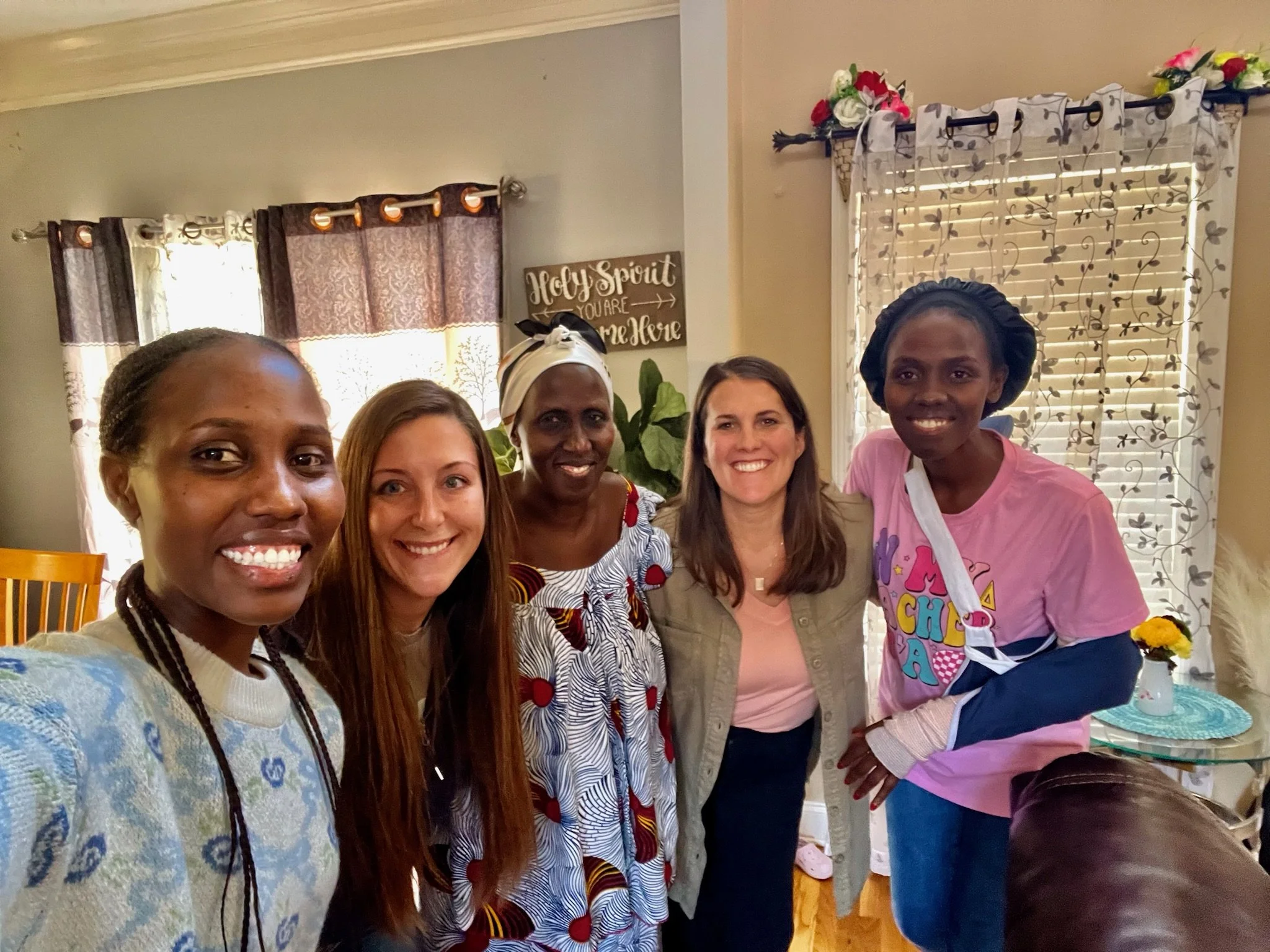
Mignone Kambabazi (left), Angelique Nibaruta (right), and their mother (middle) were visited by Institute staff Hannah Duffy and Laurie Kagay, as well as many other mentors and pastors throughout their recovery journey.
Thankfulness After Tragedy
A couple of months ago, I had a car accident. I was driving, and someone hit us from behind while we were returning from a youth conference. In that accident, two girls sitting in the back seat passed away. Afterward, it was very hard for me to thank God for preserving my life. Coming out of surgery, I struggled even to speak about God. Of course, I still needed Him, but my heart felt lost.
I asked my sister to start writing scriptures and reminders of the journey on a board. Even though I knew God had preserved me, it was difficult to say it while knowing two others had died.
Eventually, I began thanking God through writing. I started listing the body parts I still had and thanking God for them. I could not speak it out loud yet, but I chose to write it. That practice changed me. It caused me to reflect again and realize how merciful God had been to give me life again.
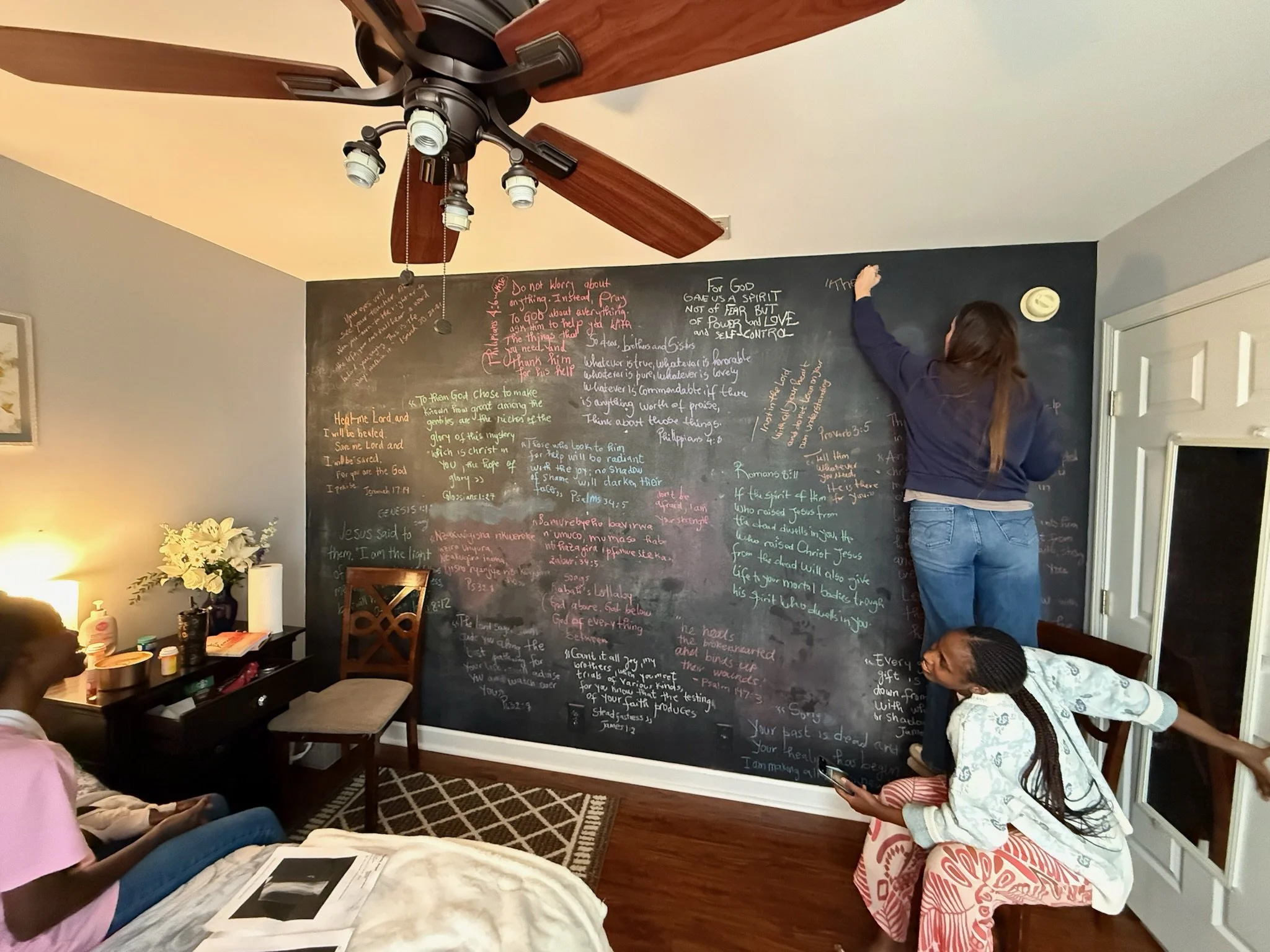
When visitors would come to see Angel and Mimi, they’d ask them to write a relevant Scripture on their chalk wall. These Scriptures became the strength they needed to recover mentally and emotionally, alongside their physical recoveries.
Thankfulness Is a Choice
Being thankful to God is not dependent on everything going well in life. It is a choice. I understand when people say it is okay not to be okay, but after that, what do we do? Do we stay stuck in our situation, or do we choose to see life from another perspective and recognize how God has been intentional in our lives, even when we were not aware of it?
When we choose God’s perspective, it transforms us. God uses that perspective to protect us from anxiety and doubt.