
Inside First Aid Arts: Learning to Care for the Mind

First Aid Arts (FAA) is a nonprofit that uses creative arts therapies to support people recovering from trauma, crisis, and chronic stress. Their approach centers on short, accessible interventions—using music, movement, visual art, and storytelling to stabilize and strengthen emotional well-being.
The techniques are practical by design. Some involve movement or drama, others use simple tools like markers or pencils, and many require no materials at all. They are built to be taught easily and used across a wide range of contexts.
During the Fall semester at The Institute, alumna Liz Kagay, LMSW/SSW, led a First Aid Arts course open to students. I attended each session and quickly saw how closely this work aligns with the Institute’s emphasis on lived theology.
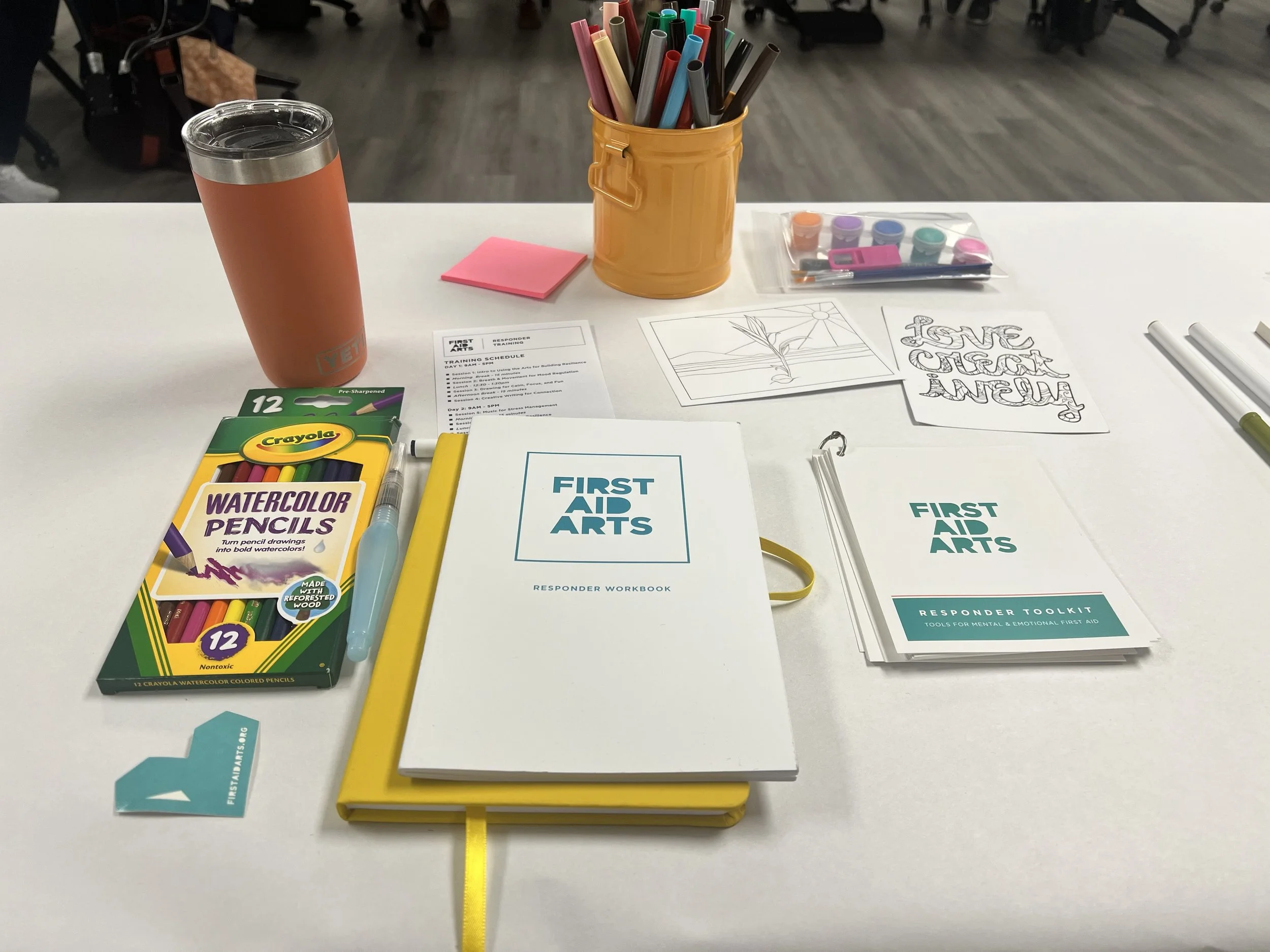
What stood out most was the connection between theology and psychology. For much of church history, psychology has been sidelined or treated with suspicion. In some cases, spiritual language has replaced meaningful engagement with the inner life. Scripture, however, speaks directly to the life of the mind.
Paul writes that God has given a spirit marked by power, love, and self-control (2 Timothy 1:7), and he calls believers to take every thought captive (2 Corinthians 10:5). These texts engage thought patterns, emotional responses, and discipline of the mind. The Christian life involves more than belief—it involves how a person thinks and responds internally.
The account of the Gerasene demoniac (Luke 8:26–39) shows this clearly. When Jesus restores the man, he is described as clothed and in his right mind. The restoration includes clarity, stability, and dignity. Jesus addresses the whole person.
First Aid Arts offers tools that help people engage that same reality in everyday situations. Rather than ignoring stress responses, it equips individuals to recognize and respond to them.
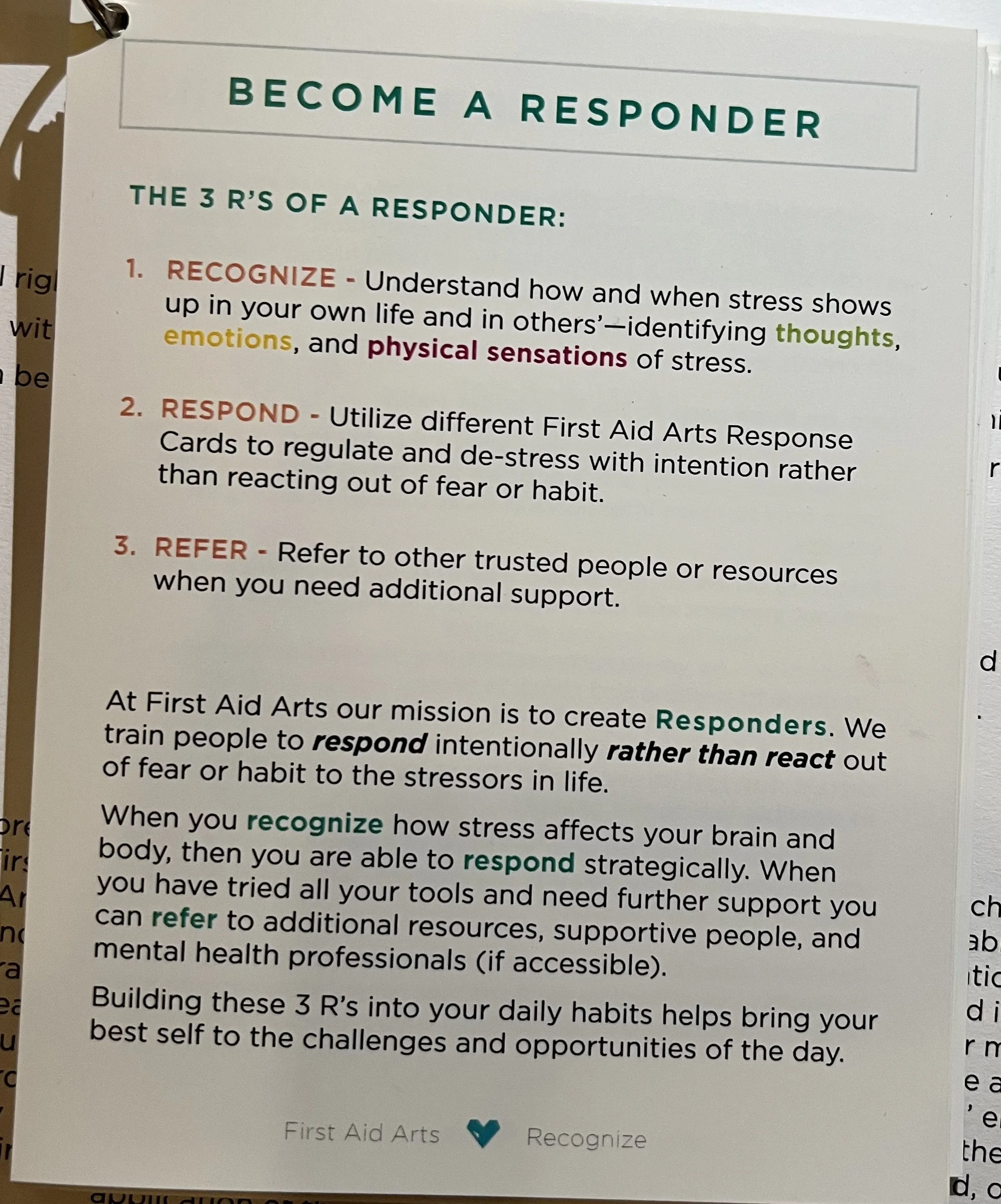
One of the most helpful frameworks we learned was the “window of tolerance.” This model describes a healthy range of emotional and mental functioning (the “green” zone), with two extremes on either side. Hyperactivity (“red”) shows up as anxiety, restlessness, or inability to focus. Hypoactivity (“blue”) often looks like withdrawal, numbness, or disengagement.
The goal is awareness and regulation—recognizing where you are and using practical tools to return to a steady state.
Each workshop introduced techniques to help do that. Some were physical, like choosing an animal that represents strength and embodying its posture to move out of hypoactivity. Others were quieter: guided breathing traced across the hand, drawing exercises, or using a “turnaround tune”—a song chosen to help shift mental and emotional state.
The strength of these techniques is their simplicity. They are repeatable, accessible, and grounded in research. They also give language to experiences many people struggle to articulate.
For Christians, this matters. Psychological struggles have often been addressed late, after patterns have already taken hold. First Aid Arts provides a way to respond earlier, with practical tools that support daily life.
Spiritual disciplines remain central. They work alongside intentional care for the mind, not in place of it.
Learning to care for the mind belongs within the life of faith.
