
Solitude as a Spiritual Discipline
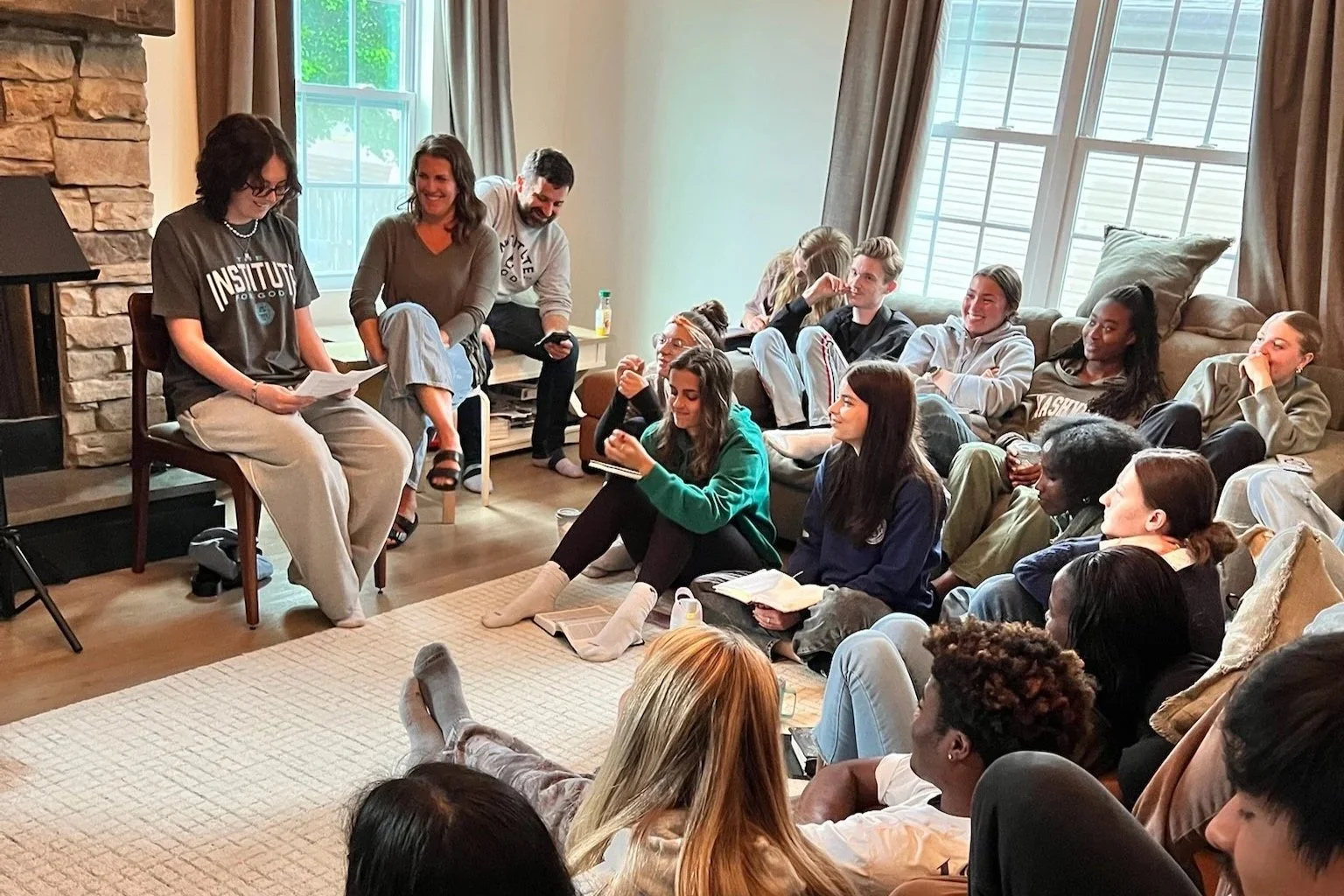
The student preaching club presented their sermons in the final chapel of the term, hosted in a faculty member’s home.
A Sermon by Esther Bargatze, Freshman

Solitude as a spiritual discipline is the intentional time we spend alone with God. Whether that be in prayer, meditation on scripture, or worship. I say “the intentional time” because having a relationship with anyone requires mutual effort. A relationship with God doesn’t just happen.
So why is it important that we take time alone with God? I would like to just give you a few reasons to think about based on some studying I did on Psalm 4.
Psalm 4:5–9
I’ll be reading Psalm 4:5-9, and I will be using Robert Alter’s translation. I am going to be focusing on the latter half of the chapter. In the first half of the chapter, verses 1-4, we get that this person is dealing with mockery or people trying to shame them. The previous chapter actually gives some context to this, being primarily about God as a rescuer from enemies. The author also recognizes that God will answer those who are faithful.
“Quake, and do not offend.
Speak in your hearts on your beds, and be still.
Offer righteous sacrifices
and trust in the Lord.Many say, ‘Who will show us good things?’
Lift up the light of Your face to us, Lord.
You put joy in my heart,
from the time their grain and their drink did abound.In peace, all whole, let me lie down and sleep.
For You, Lord, alone do set me down safely.”
From Agitation to Stillness
Quake, in Hebrew, means to be agitated, to quiver, be perturbed, or be in an excited state. So this is describing the mental state of a person, in this case, maybe the author who is dealing with people saying harmful things about them. Paired with this action is the charge to “not offend” or “sin,” implying that this is a plausible or even common response to being agitated.
Then we get another action: “Speak in your hearts,” the Hebrew word here translates as utter, say, declare, even command or make prominent. I think most translations use ponder. We get a specified place where this speaking/pondering should happen, in bed. Then it says to “be still.”
This short flow gives us a way out of a state of agitation. I would like to read a quote from Robert Alter’s commentary on this verse specifically:
“The auditors of the poem are exhorted to tremble as an act of conscience that will dissuade them from acts of transgression, then commune with themselves in the solitude of their beds and speak no more. The verse thus moves from a state of troubled agitation to silence at the end.”
Trusting God in the Midst of Anxiety
Moving to verse 6: Offer righteous sacrifices and trust God. Give to God what is pleasing to Him, not what is pleasing or satisfactory for you, and have faith that He will honor that.
Verse 7: Many say, “Who will show us good things?” Lift up the light of Your face to us, Lord. We’re reminded again to have faith. When we are looking for good, it is with God that we will find it, so it is important to go straight to Him.
Because when we do so, he puts joy in our hearts, even more joy than when “grain and wine abound,” which is an understandable cause for joy in an agricultural society.
I think that the joy God puts in our hearts should contrast what was being spoken in our hearts in the previous verses. Notice that this joy has come on the other side of inviting God into the moment. The first mention of the heart was the action of speaking in one's heart about what it is that is making them anxious. As Alter says, this is an act of conscience, which I interpret as a sort of identification of what is wrong. The resolve at the end has to begin with identifying, speaking in our hearts, what it is that needs to be changed.
Peace, Rest, and Sleep
The final verse, “In peace, all whole, let me lie down and sleep. For You, Lord, alone, do set me down safely.”
We kind of get here that this is a before-bed Psalm. The Psalms are great because they can be so relatable. I think we’ve all experienced nighttime anxiousness. I often find myself late at night mulling over fears related to how my family is doing, uncertainty in my decisions, and insecurity in relationships that are changing. It makes sense that if you’re just going all day, when you finally take a moment to rest, your mind floods with everything you were able to effectively distract yourself from all day.
I would like to read another quote from Robert Alter's commentary on this last verse:
“Restful sleep as a restorative manifestation of the speaker’s trust in God’s protection is a recurrent motif in Psalms. It is the precise antithesis to the tormented ‘blank nights’ without rest of which Job speaks.”
This is the result of trusting God instead of leaving anxiousness unchecked: Peace, wholeness, rest–and quite practically–just the ability to sleep.
A Necessary Daily Practice
This has been the craziest year, ever, for me at least. There are lots of reasons to be anxious, but there will always be reasons to be anxious. This Psalm does not say, “Quake, and you're screwed because that’s not supposed to happen when you believe in God.” What it does is give a way to immediately catch those moments of agitation and redirect our minds to trust in God, which gives us the peace we need for rest.
Having moments of reflection like this should not just be a response to when you’re angry. Solitude as a spiritual discipline, in light of Psalm 4, is a necessary daily practice–where we spend time alone, identifying what anxieties exist in us, and stop them from manifesting in our lives by giving them to God. By remembering God’s word.
Why do we do this? Because we do not want to offend. We do not want to sin. If we let anxiety and agitation grow in us, it will inevitably harm others. We don’t spend time alone with God because it’s cute; this is not a skincare night to make us feel rejuvenated. The rest and peace we can experience on the other side of alone time with God gives us ways to move forward in line with God's will.
A Final Encouragement
Going into the summer, we’re all going to be doing different things and will probably be less accountable to these spiritual disciplines. Let’s remember to take intentional time with God, don’t become complacent, but be active in your development as a Bible student. I think time alone with God is a very necessary practice; we see it modeled by Jesus. Reflect, identify, and allow God to work in you. There’s almost always some time right before you go to sleep, starting tonight, take a moment to identify just one thing that could be taking away from experiencing God’s presence and pray about it. Get to it before it becomes an issue that could hurt other people.